Small Lives: A Few Insects, Up Close
Lately I have been taking my macro lens out into the garden and the bush, and slowing down enough to actually look at what lives there. The closer you get, the stranger and more specific everything becomes. A few of the ones I have been photographing:
Jumping spiders. Tiny, fuzzy, and unreasonably charismatic. They don't spin webs to catch prey — they stalk it, calculate the jump, and pounce. They have eight eyes, but the two big ones in front give them the best vision of any spider, and quite possibly the best vision of any animal their size on Earth. When a jumping spider turns its head to look at you, it really is looking.
Moths. Often dismissed as the dull cousins of butterflies, which is unfair on every count. There are around ten times more moth species than butterfly species, they come in extraordinary patterns and colours, and they do most of the night-time pollination work that keeps ecosystems running. The dust on their wings is actually thousands of tiny scales, each one a separate structure.
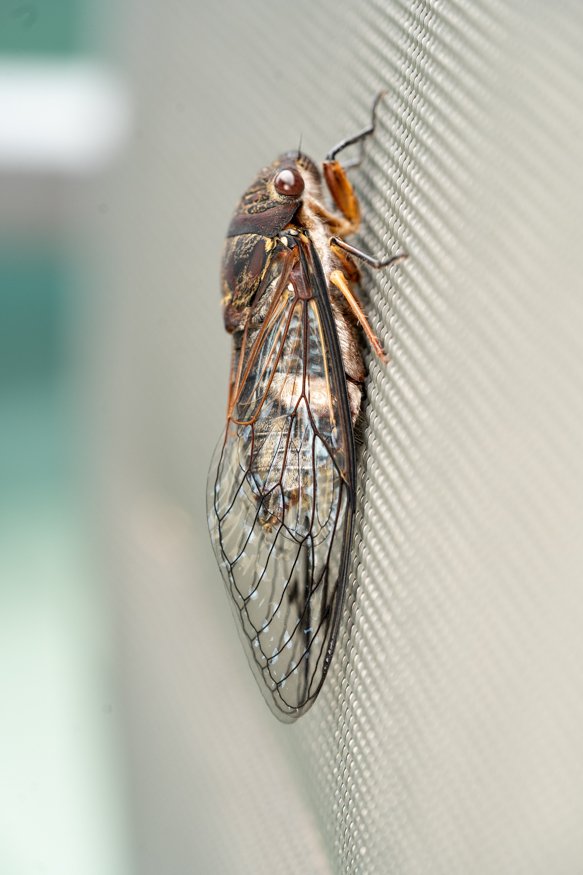
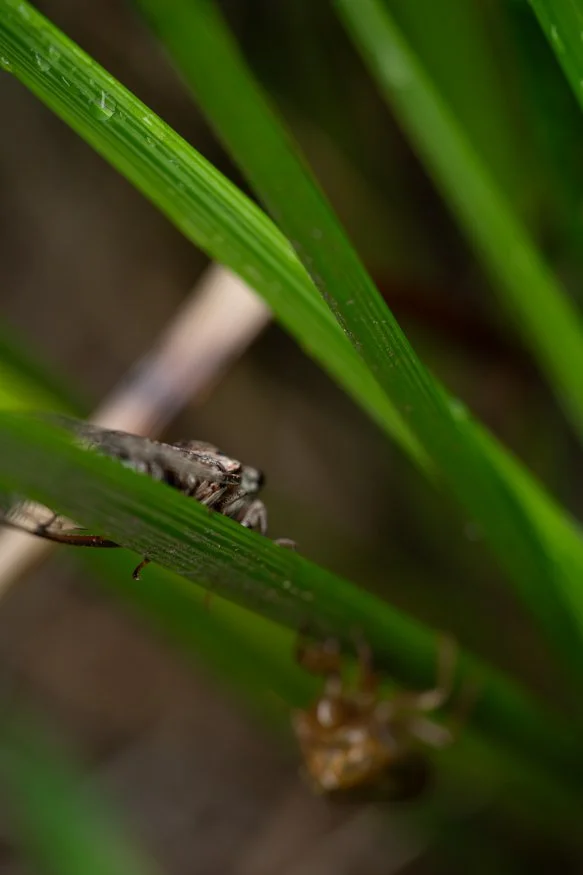
Cicadas. The most patient insects I know of. Some species, the periodical cicadas in North America, spend 13 or 17 years underground as nymphs, feeding quietly on tree roots, before emerging all at once in their millions. The males produce that loud electric drone using membranes called tymbals on the sides of their abdomens — it can reach over 100 decibels up close, which is roughly the volume of a chainsaw. They do all this in a few short weeks above ground, mate, lay eggs, and die. Australia has its own cicadas — green grocers, black princes, redeyes — and on a hot summer afternoon, the sound is the soundtrack of the bush.
Assassin bugs. The one in the photo is most likely a Common Assassin Bug (Pristhesancus plagipennis), common across eastern Australia. They are ambush predators with thickened front legs for grabbing prey, and a long beak they use to inject digestive enzymes into other insects — including spiders, which is how this one ended up nicknamed in my photo folder. Not gentle, but ecologically essential. They keep pest populations in check.
What strikes me, photographing these creatures up close, is how much is going on in each of them. Vision, strategy, patience, sound, chemistry. Whole lives, conducted at a scale most of us walk past without noticing.
It is worth getting low and looking.
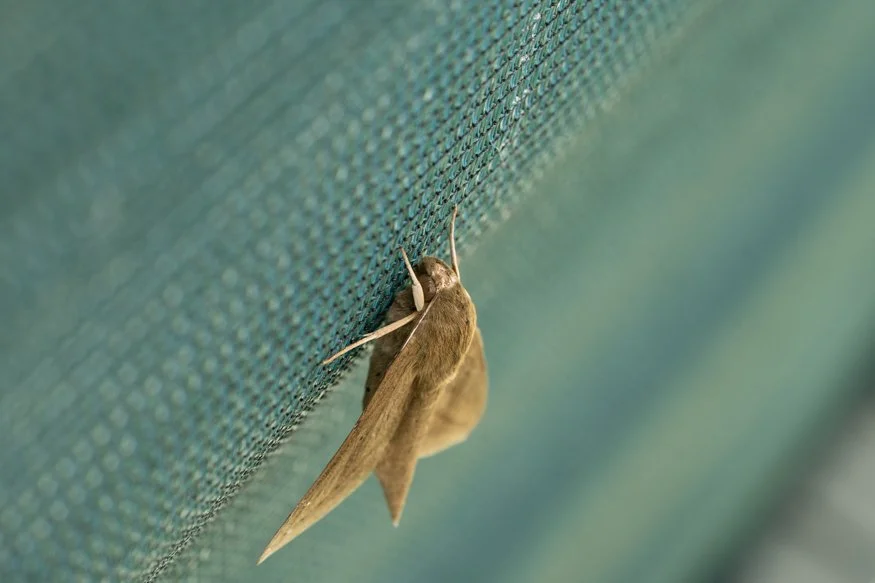
Moth
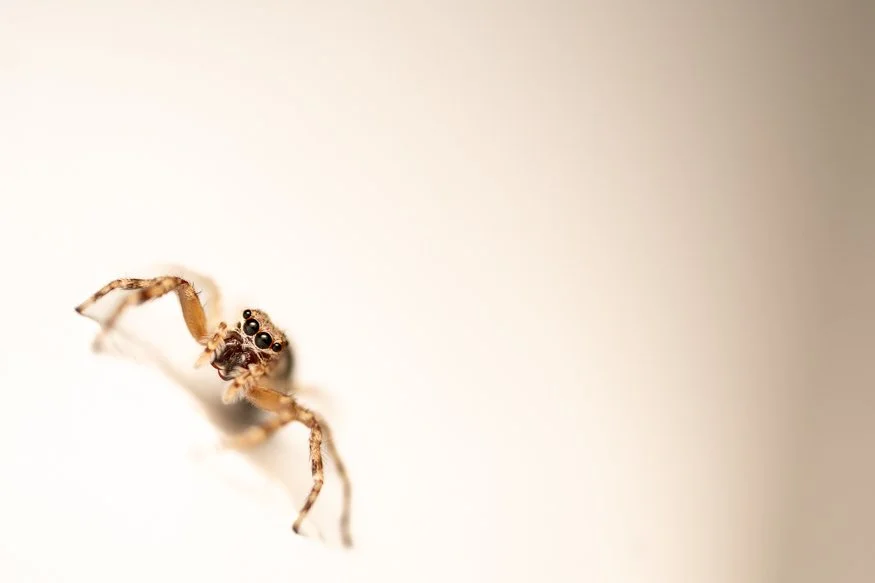
Jumping spider
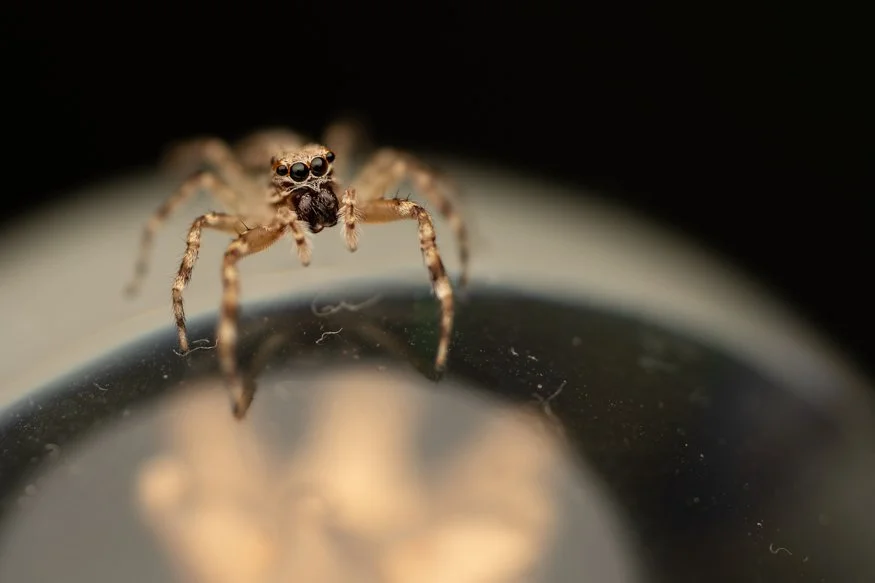
Jumping spider
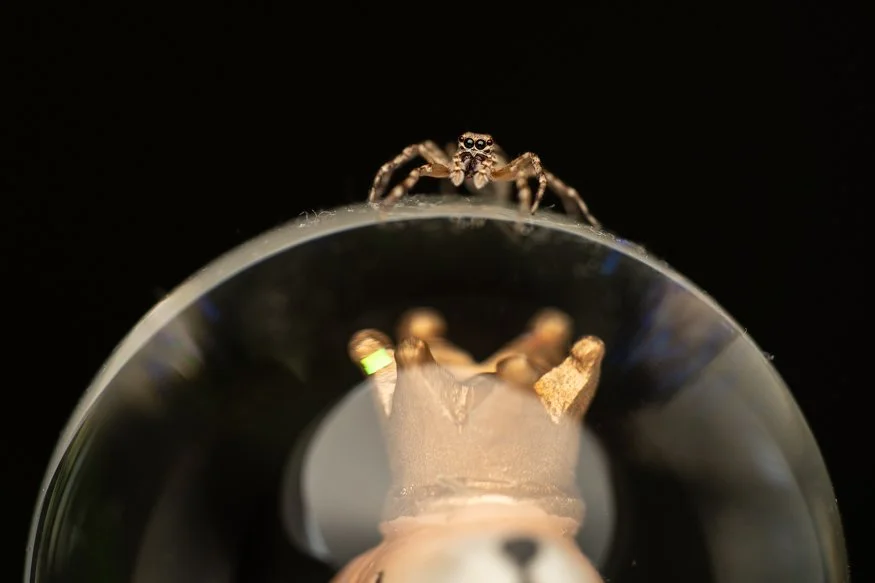
Jumping spider
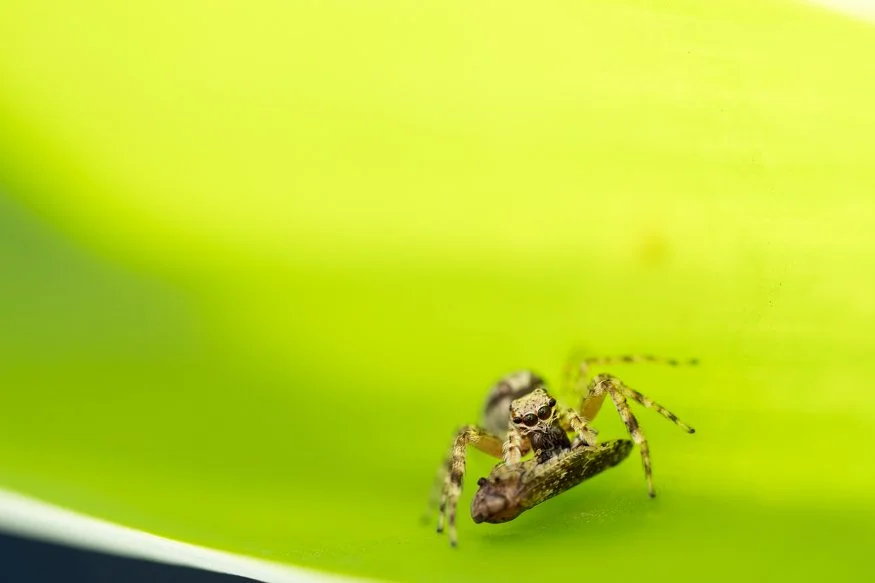
Eating jumping spider
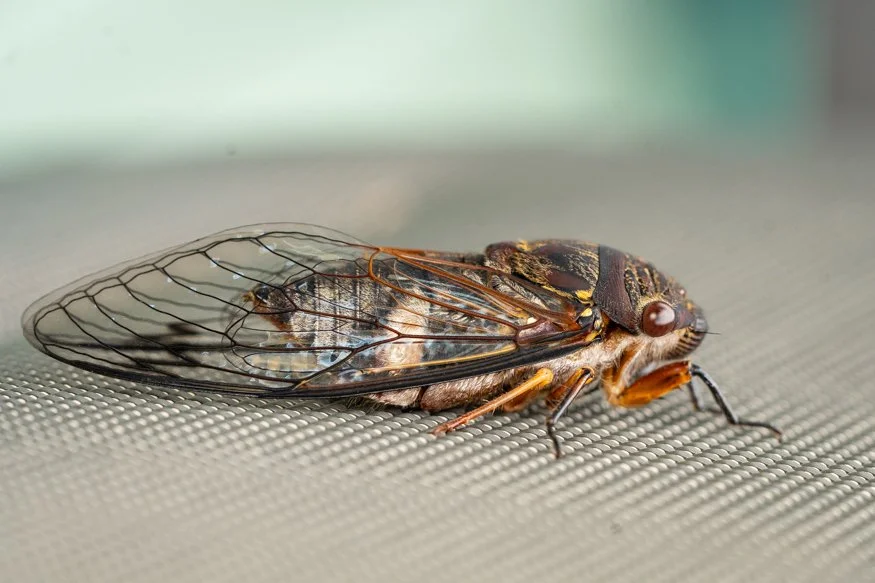
Cicade
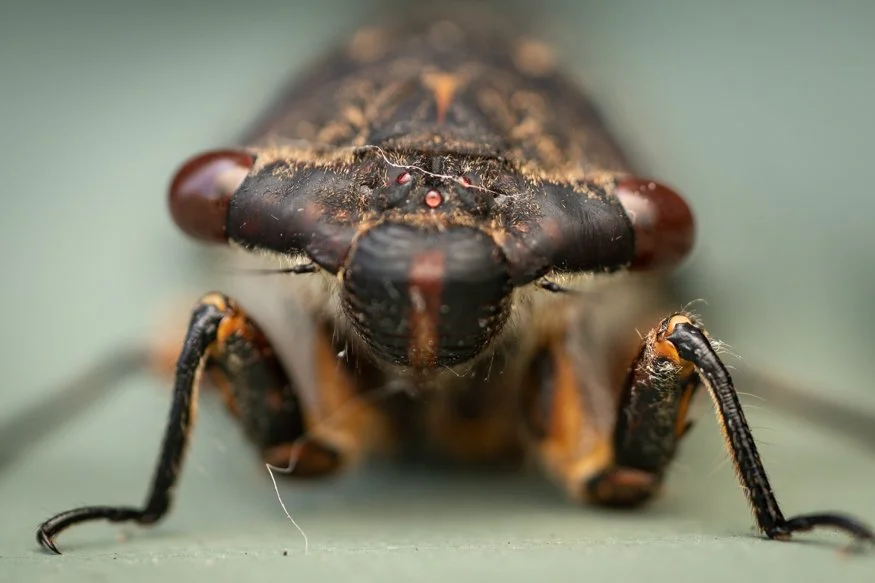
Do you see the eyes on top of his head?
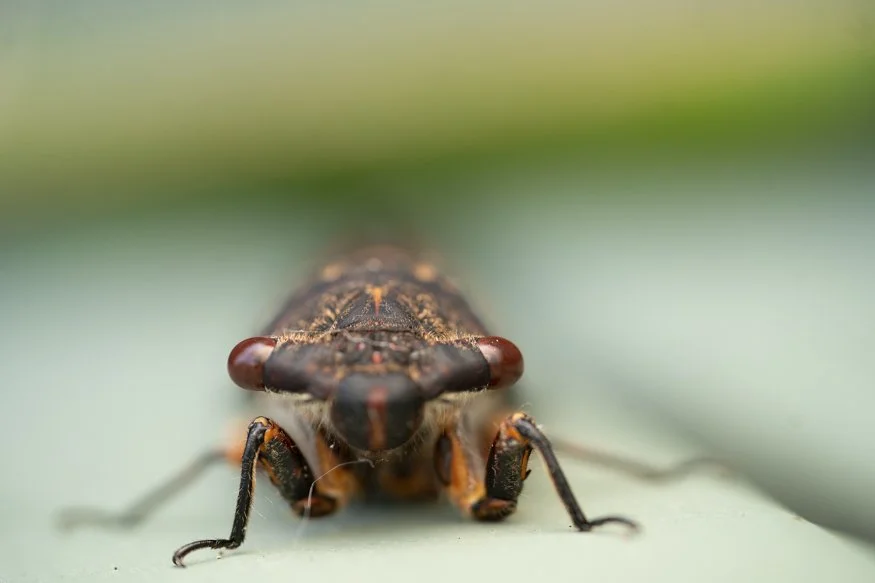
Cicade
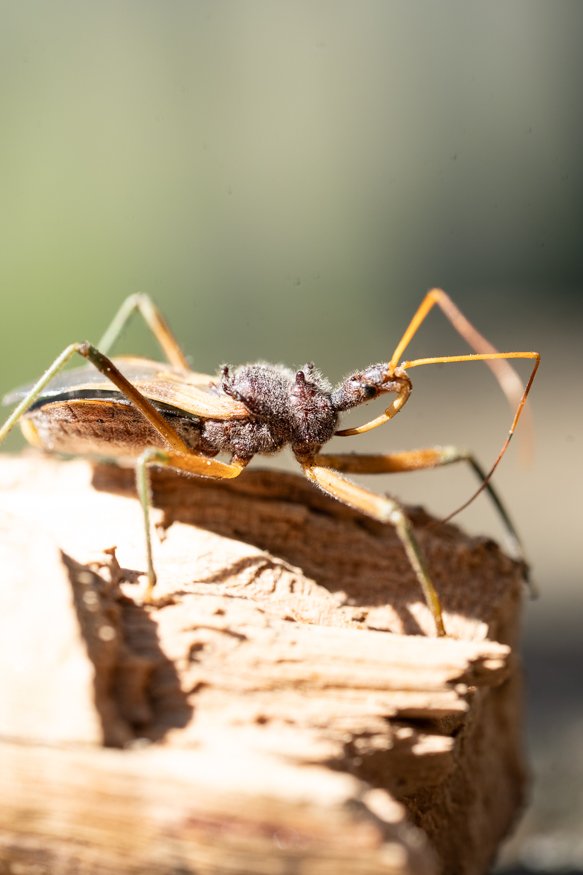
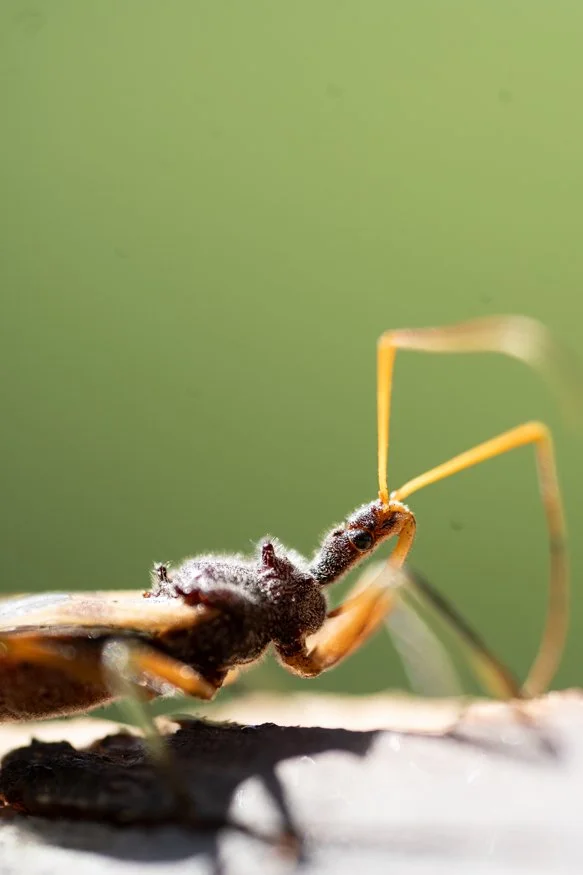
Assassin bug